
Why These Presentations Exist
I have seen firsthand how standard bereavement support rarely addresses the profound isolation of violent loss—a reality that leaves many families adrift. Homicide survivors and bereaved parents often find themselves navigating a landscape that feels entirely alien to those around them. Victim-services professionals recognize this gap but frequently lack the specialized tools to bridge it.
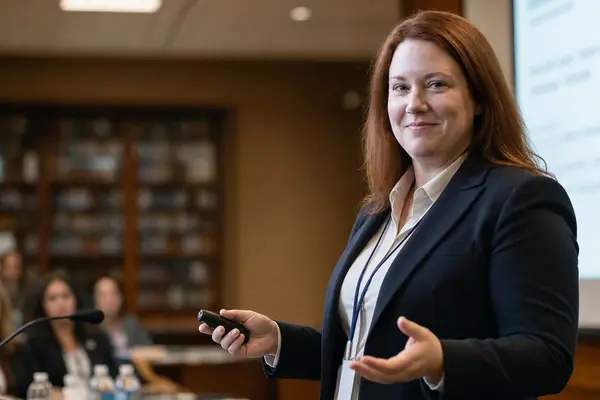
Over roughly the past two to five years, host introductions and speaker bios have consistently highlighted a unique approach to this challenge. Lynn Shiner and Nancy Chavez, co-authors of the shared memoir Stabbed in the Heart, step in front of audiences to convert their lived experience into transferable insight. Their live presentations offer a distinct format that honors the reality of murder while equipping communities to respond effectively.
How These Takeaways Were Identified
Beneficiary reporting confirms that certain themes resonate universally across different crowds. We grouped recurring audience feedback by setting type, looking specifically at victim-services trainings, university lectures, and community or faith-based events.
During a two-pass editorial review over about a month, we first tagged raw recurring themes. Then, we filtered the list to keep only the insights that produced a practical action or a changed professional frame. Be aware that these represent qualitative audience patterns rather than clinical outcomes or peer-reviewed evidence.
1. Grief After Homicide Does Not Follow a Timeline
Audiences must release the expectation of closure before they can absorb anything else. Traumatic grief dismantles the myth of a neat, linear recovery. Instead of abstract emotional phases, the presentation grounds grief in concrete triggers.
- Birthdays and death anniversaries
- Trial and sentencing dates
- Appeal notices
- Parole-review notices
Professionals in attendance frequently report rethinking their client timelines after hearing this segment. A workable approach involves scheduling follow-up contact two to six weeks after a hearing or media recurrence, rather than assuming the event itself marks an endpoint.
2. The Criminal Justice Process Is Its Own Ordeal
Shiner and Chavez describe navigating the legal system as a second layer of trauma. The presentation translates a rigid legal sequence into a deeply human survivor experience.
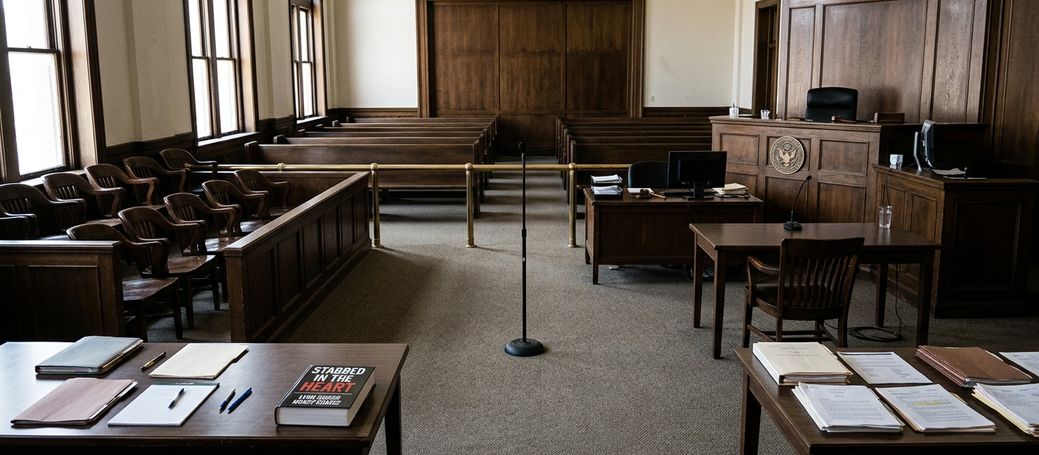
Audiences gain literacy in the specific stages of this ordeal. They learn about the grueling progression from investigation and charging to pretrial hearings, the trial or plea, sentencing, and the victim-impact statement. The talk also covers long-term realities like appeal activity, notification rights, and parole-related contact.
Organizers typically allocate 10 to 20 minutes of a standard talk to this justice-system burden. This framing is highly useful for advocates explaining the system to newly bereaved families, helping them understand the crime-victim rights overview without feeling overwhelmed.
3. Grief Can Be Channeled Into Advocacy
Moving from private loss to public action offers a constructive path for some. The authors discuss their ongoing work with crime-victim legislation, survivor support, public education, and victim-rights awareness. Audiences see a concrete model for transforming devastation into systemic change—though this path is never an obligation.
Note: Advocacy is presented as one possible option. For newly bereaved attendees, this path is described as a later possibility. We avoid presenting it as an immediate task during the first three months or so after a homicide unless the survivor has already asked for that route.
4. How to Support a Survivor Without Causing Harm
Non-bereaved audience members often ask what they can actually do. This section provides practical language for clergy, counselors, emergency responders, and educators.
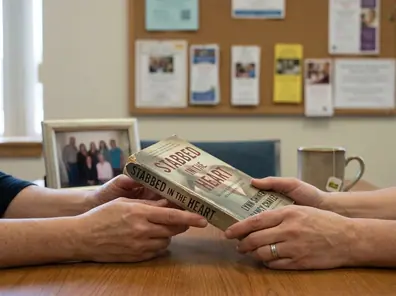
Quick Tip: Presence matters far more than problem-solving. Usable phrases include "I am here with you," "I remember their name," and "I can sit with you without needing you to be okay."
Conversely, the presentation clearly identifies phrases to avoid because they pressure survivors. Telling someone "everything happens for a reason," "at least they are in a better place," "you need closure," or "it is time to move on" causes active harm.
5. Survival and Meaning Are Possible
The sight of two bereaved mothers standing together provides a lived example of resilience. Positioned in the final 5 to 12 minutes of a 45 to 90-minute presentation, this segment ensures hope does not read like a shortcut around the harder material.
The co-authors continue their survivor-support work, often collaborating with organizations like The Authors Zone (TAZ) to amplify their message. Audiences leave with a real sense of hope grounded in observable facts rather than empty platitudes.
Scope and Limitations of a Single Presentation
A presentation introduces concepts and validates experiences, but it does not replace clinical trauma therapy. Audience experience varies heavily by setting. A university lecture may emphasize victim-rights literacy and the criminal justice process. A survivor support group may need slower pacing, fewer procedural details, and more time for silence.
Summary: Content can be activating. A recently bereaved attendee may find the material overwhelming and may need to step out, skip the Q& A, or connect privately with a support person rather than stay for the full program.
Organizers should provide trigger-awareness language in registration materials one to three weeks before the event. For in-person programs, arranging a quiet space and having at least one trained support contact available for 20 to 45 minutes after the talk is highly recommended.
Planning a Responsible Event
Readers who recognize the relevance of this material need a practical path to responsible hosting. Common venues include victim-services conferences, universities, faith communities, survivor support groups, professional trainings, and community education programs.
Successful events require a planning window of 6 to 12 weeks before the date. This timeline should include a 30 to 60-minute preparation call to match the presentation depth, audience composition, content warnings, Q& A format, and on-site aftercare.







Your Thoughts
Nothing here yet. Add your opinion.