
Two Mothers, One Unimaginable Loss
Lynn Shiner and Nancy Chavez stand at the center of Stabbed in the Heart because their authority is not abstract. They are two mothers writing after the murder of a child, and that fact changes the moral weight of every page.
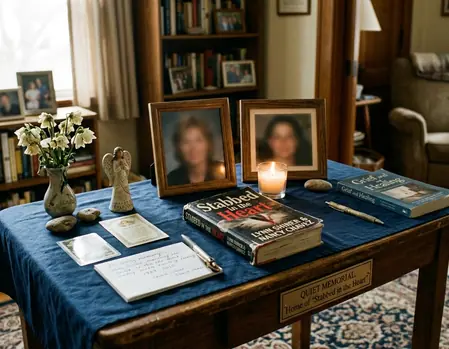
The book belongs to a narrow and necessary shelf: survivor literature for homicide bereavement. Many grief books help readers understand death after illness, aging, accident, or suicide. Homicide grief carries those same questions of absence and love, then adds investigation status, court dates, offender accountability, public narratives, and safety concerns.
That combination can leave a family stranded.
In the first month after a homicide death, relatives may be handling death notification, funeral arrangements, law-enforcement contact, victim-services forms, media or community questions, and basic household disruption at the same time. The parent is not only grieving. The parent is answering calls, signing papers, hearing unfamiliar terms, and trying to protect the child’s name from careless retelling.
Stabbed in the Heart responds to that silence by centering the mothers rather than the crime file. That editorial choice matters. It refuses to make the child’s death only a case, only a headline, or only an event that happened to other people.
Note: Homicide bereavement should not be treated as ordinary grief with a more violent cause. The systems around the death can become part of the grief itself.
Why Traumatic Grief Resists Language
The legal world arrives before the heart is ready
After many natural deaths, families may meet physicians, hospice workers, funeral directors, clergy, and relatives. After homicide, the first circle often includes police interviews, autopsy findings, prosecutor contact, hearings, sentencing, parole notifications, witness testimony, and public speculation about the victim or offender.
The timing can be brutal. Urgent institutional contact can begin within the first few days after death notification. Funeral and paperwork demands often cluster within the first couple of weeks. Criminal-case involvement may return over months or years, depending on investigation, charging, trial, sentencing, appeal, or parole processes.
So when a bereaved parent says, “I do not have words,” that is not a simple description of sadness. It may describe shock, fear, fragmented memory, legal caution, and the strain of being watched.
What language cannot hold all at once
Survivors may avoid words that make the death feel final. They may repeat the same few facts because memory has not settled into a sequence. They may fear judgment from outsiders, especially when strangers decide they know what kind of person the child was, what the family should have done, or what justice ought to look like.
Some parents withhold details to protect siblings, spouses, or legal proceedings. Silence, in that setting, is not always denial. Sometimes it is triage.
Writing can help some survivors create a safer container for what cannot yet be spoken. Structured expressive-writing exercises in research settings often use short sessions of roughly 15 to 20 minutes across several writing periods. Trauma-narrative work in therapy, however, is typically paced by a licensed clinician rather than forced on a fixed schedule.
That distinction deserves care. A memoir can model language, but it does not require a newly bereaved parent to disclose more than the body and mind can bear.
How the Book Is Built: Two Voices, One Narrative
The two-author structure is not a publishing detail to skim past. It is part of the reading experience.
Because Stabbed in the Heart is built around the voices of Lynn Shiner and Nancy Chavez, the book resists the false idea that one mother’s grief can stand in for all bereaved parents. One reader may recognize shock and disbelief. Another may recognize anger, advocacy, religious questioning, court fatigue, or the need to keep speaking the child’s name.
Parallel grief without making one pattern universal
Alternating maternal perspectives can widen recognition. The reader does not receive a single map. The reader sees two lives altered by the murder of a child and notices both connection and difference.
A careful close reading should identify where the printed book marks speaker changes, chapter breaks, dates, or alternating sections before making claims about the exact pattern. Without the book copy open in front of us, it would be wrong to invent a chapter count, chronology, or fixed alternation.
What can be said responsibly is this: two maternal voices can prevent one story from becoming the universal story. That is especially important in homicide bereavement, where a closed case, an unsolved case, a plea agreement, a trial, an appeal, and a parole process each create different grief pressures.
The title as wound and testimony
The title Stabbed in the Heart carries both the direct violence implied by the wording and the emotional meaning of a parent’s heart wound after the murder of a child. It does not soften the injury. It names it.
In support-group work, I have learned to listen for the phrases parents return to again and again. Those phrases often hold the truth before the full story can be told.
Summary: The book’s two-voice design gives readers more than chronology. It offers a way to hear grief in stereo: separate lives, shared wound, different paths through the same impossible category of loss.
From Personal Pages to Public Advocacy
Private writing becomes public advocacy when it is shaped into something another survivor can reach for without having to explain everything first.
That movement matters in homicide bereavement because newly bereaved parents often do not have the strength to search widely. A useful resource has to meet them in ordinary handoff places: a victim-services office, a grief-support meeting, a therapist’s resource shelf, a survivor conference book table, or a family member’s care package.
When testimony becomes a companion text
Stabbed in the Heart can be used by bereaved parents, peer-support groups, victim advocates, counselors, clergy, and trauma-informed reading groups as a companion text for discussing homicide grief. The word companion is important. It sits beside the survivor rather than speaking over them.
Beneficiary reporting confirms a pattern many practitioners recognize: parents often need language before they can ask for help clearly. A book written by mothers who have lived after the murder of a child can give permission to say, “This is part of my grief too.”
Still, readiness differs. A parent may encounter the book during acute grief in the first half-year or so, while public advocacy by survivors usually requires a different level of steadiness than private reading or journaling. Reading one chapter quietly is not the same as speaking from a podium or guiding another family through the courthouse hallway.
The credibility here is grounded in first-person bereaved-parent experience. It should not be confused with clinical authority, legal credentialing, or institutional research unless those credentials are separately verified.
Quick Tip: In a support group, invite participants to respond to one short passage rather than asking them to summarize the whole book. Homicide grief often needs a smaller doorway.
What the Book Offers — and What It Does Not
A memoir can reduce isolation. It can give survivor language to feelings that arrive tangled: love, rage, guilt, longing, fear, spiritual protest, numbness, and the need for justice. It can also become a bridge into conversations with family members, advocates, clergy, therapists, or support groups.
That is real value.
It is also bounded value. Stabbed in the Heart should not be asked to diagnose PTSD, treat suicidal crisis, advise on testimony, interpret evidence, predict court outcomes, replace a safety plan, or determine legal strategy. The memoir can sit beside trauma therapy, victim advocacy, legal counsel, and peer support, but it should not replace any of them when safety, mental health, or court decisions are at stake.
When to add live support
Some signs call for immediate, human help rather than solitary reading. These include suicidal thoughts, inability to sleep for several nights, panic or flashbacks that prevent basic functioning, fear of retaliation, stalking or threats, substance-use escalation, or inability to care for dependents.
A newly bereaved parent in the middle of active testimony or safety threats may experience a grief memoir as too activating unless paired with a trusted advocate, clinician, or support person. This is not a weakness in the reader. It is a sign that the nervous system is already carrying too much.
The timeline is not neat
Administrative shock may dominate the first days and weeks. Criminal proceedings can stretch across months or years. Birthdays, death anniversaries, sentencing, appeals, and parole notifications can reactivate grief long after others assume the family has “moved on.”
The conclusions here are limited to the book’s stated survivor-resource purpose and common homicide-bereavement support settings, not to measured clinical outcomes. That limitation keeps the recommendation honest.
Reading and Supporting the Work
The practical question, after all of this, is simple: how does a reader find the book without turning a grief resource into a sales pitch?
Stabbed in the Heart is available through the official site’s designated physical-retail partner, Midtown Scholar Bookstore. That matters because access should feel concrete. A reader, advocate, counselor, or family member can select the book through the official purchase path or retail partner page, proceed to the external secure checkout, complete payment, and receive confirmation from the checkout or retail system.
Purchases are processed through PayPal’s secure servers, so payment-card handling occurs off-site rather than directly through the authors’ article page. Shipping speed, taxes, inventory status, refund terms, and delivery timing should be checked on the active checkout page at the time of purchase.
Why acquiring the book can matter beyond one reader
Buying the book supports the work by keeping survivor-centered copies in circulation. It also helps the authors’ advocacy remain visible to families, professionals, and support networks seeking homicide-bereavement resources.
One copy on a shelf can be quiet for a long time. Then a parent walks in after the worst phone call of their life, and the book is there.
That is not a cure. It is a form of witness.







Your Thoughts
Nothing here yet. Add your opinion.