
Why Memorialization Matters After Violent Loss
After a child is murdered, grief rarely stays private.
Parents may be asked to identify remains, make funeral decisions, answer investigator questions, speak with a prosecutor, attend hearings, read court notices, complete restitution paperwork, or prepare for sentencing. Later, appeals or custody-status notices can pull the family back into the case years after the funeral. These contacts are not side issues. They shape the grief environment.
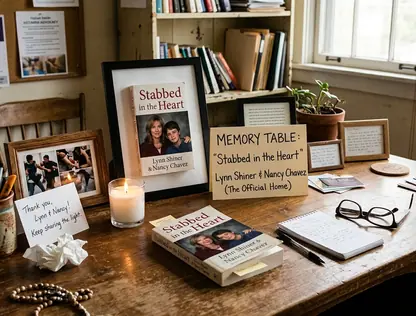
That is why memorialization after homicide needs careful language. It is not a shortcut to closure. Many bereaved parents dislike that word because it suggests a door should shut. A child remains a child. A name remains a name.
Bereavement research often describes this ongoing relationship as a continuing bond. The concept matters here because it gives parents permission to keep loving, speaking, writing, gathering, and remembering without treating those acts as signs of being stuck. The field has documented continuing bonds in bereavement research, though no study can fully hold the particular weight of a child’s murder.
The timing also matters. The DSM-5-TR recognizes prolonged grief disorder in adults only after at least 12 months have passed since the death. Early severe grief after violent death should not be mislabeled simply because it is intense. Shock, rage, confusion, numbness, and the need to repeat the facts can all appear in the first stretch.
Lynn Shiner and Nancy Chavez, authors of Stabbed in the Heart, bring a different kind of authority to this subject. They write as bereaved mothers, not as detached observers. Their lived experience grounds this discussion in homicide-survivor grief and crime-victim advocacy, where remembrance often has to coexist with police reports, legal dates, and public attention.
Note: Memorialization should not be used to measure how well a parent is grieving. Some families speak a child’s name publicly. Others protect that name quietly. Both can be loving.
How We Selected These Memorial Approaches
The approaches below were selected with one practical question in mind: could a family start, pause, repeat, or hand off the memorial without needing wealth, public visibility, or a large organization?
That question matters in homicide bereavement because capacity changes. A parent may have energy in March and none in April because a hearing moved, a news story resurfaced, or an appeal notice arrived. A memorial that depends on one exhausted parent managing every phone call can become another burden.
For that reason, the criteria were intentionally modest:
- Emotionally sustainable: the practice can continue without requiring parents to retell the violent details each time.
- Affordable or scalable: the memorial can begin small and grow only if the family wants that.
- Repeatable: the practice can return annually, seasonally, or only when the family has capacity.
- Adaptable: the memorial can shift around birthdays, holidays, sentencing, appeal milestones, or the first 6 to 12 months after a major court development.
- Recognizable in survivor communities: the idea reflects practices families already use after homicide loss.
In support-group settings, I have learned to ask one screening question before recommending any public memorial: can one household or a small circle of 2 to 5 trusted people carry this out without forcing the parents to manage every donation, invitation, media request, or guest list?
Accessible locations may include a home, school, place of worship, cemetery, garden, victim-services office, community room, public park, or moderated online space. Safety and privacy decide the setting, not appearances.
Quick Tip: Reassess memorial plans 2 to 4 weeks before major dates instead of deciding permanently in the first wave of grief.
Ways Families Keep Their Children’s Names Alive
The following options move from structured, repeatable memorials toward more public or higher-maintenance forms of remembrance. None is a prescription. A school scholarship may comfort one family because it connects the child’s name to classmates and future students. Another family may find the same setting unbearable and choose a private service day, cemetery ritual, garden planting, or written tribute.
Memorial Funds and Scholarships
A memorial fund or scholarship gives a child’s name a recurring place in the community. It can be tied to a school, trade program, youth activity, place of worship, neighborhood group, or organization the child loved.
The practical structure matters. Families typically need a fiscal holder, written eligibility criteria, a decision-maker or small committee, a gift-acceptance process, and an award date. If the first award connects to a school year, planning 3 to 6 months before the intended presentation date gives teachers, faculty, or administrators time to review applications or nominations.
Keep the criteria human. A scholarship does not have to honor only grades or leadership titles. It may honor kindness, art, music, sports, vocational training, service, persistence, or another quality that truly belonged to the child.
The strongest version is often the simplest: one date, one award, one clear purpose. The date might be the child’s birthday, graduation season, the anniversary month, or a day connected to an activity the child loved.
Advocacy in Their Name
Advocacy can become a concrete form of memorialization when a parent wants the child’s name connected to change.
Nancy Chavez’s path in Stabbed in the Heart offers one lived-experience example: grief moved into legislative and survivor-support work. That does not mean every parent should testify, meet with legislators, or become public. It means advocacy can be shaped carefully when the family has the desire and support to do it.
Concrete activities may include preparing written testimony, meeting with victim-services staff, speaking with legislators, supporting sentencing-notification improvements, helping other survivors understand rights paperwork, or joining policy work related to crime victims.
A manageable first step is a one-page statement with three parts: the child’s name, the problem being addressed, and the requested change. After that, 1 to 3 meetings with advocates or public officials can help the family decide whether public testimony feels bearable.
This kind of memorial can carry meaning, but it carries exposure too. Parents may hear legal language that feels cold. They may meet people who know the case only as a file. A trusted advocate can help slow the pace.
Annual Gatherings and Balloon or Candle Vigils
Shared ritual gives grief a place to stand.
Birthdays, anniversary dates, holidays, and sentencing dates can bring a sudden concentration of memory. A gathering or candle vigil can give family and friends a way to speak the child’s name together instead of leaving parents alone with the date.
Small roles reduce pressure. One person can handle location permission. One can send invitations. One can bring candles or printed photos. One can stay after to clean up. Parents should not have to carry the whole event unless they choose to.
For public parks, sidewalks, or streets, checking local permit rules 30 to 60 days before the gathering reduces last-minute stress. If the family chooses balloons, local environmental rules and community concerns should guide the plan. Some families substitute bubbles, flowers, stones, lanterns, songs, or a moment of silence.
The point is not the object. The point is witness.
Scope, Limitations, and a Note on Professional Support
This article is a peer-informed and survivor-centered resource. It is not clinical treatment, legal advice, or a substitute for a victim advocate, attorney, licensed grief counselor, trauma therapist, or medical professional.
That boundary is important because some memorial practices can reopen trauma. Public advocacy, media tributes, and open digital memorials may expose families to speculation, graphic case details, hostile comments, blame, or offender-centered narratives. An open tribute page can become harmful after an arrest, hearing, appeal update, or news story if strangers begin posting about the case. A safer plan may include comment approval, a temporary pause, or a trusted moderator.
Professional support may be especially helpful before and after homicide-case milestones: investigator interviews, preliminary hearings, trial dates, plea hearings, sentencing, appeal updates, parole notifications, media contact, or the release of records.
A practical support plan can be plain and concrete:
- Schedule counseling or victim-advocate contact within 24 to 72 hours before and after a major hearing.
- Arrange transportation with a trusted person rather than driving alone after court.
- Identify a quiet place to decompress before returning home.
- Decide in advance who will handle calls, texts, press inquiries, or social media messages.
Clinical red flags deserve immediate care. These may include persistent inability to sleep, intrusive images, panic symptoms, suicidal thoughts, substance misuse, inability to manage basic daily tasks, or trauma symptoms that intensify around anniversaries and court dates.
Because this is a peer-informed resource, it cannot rank what heals after homicide. It can only describe memorial patterns families have found usable while urging professional care when grief and trauma begin to overwhelm daily functioning.
Choosing What Feels Right for Your Family
Start small if small is what you can do.
A family may choose one private act for 30 to 60 days: lighting a candle at dinner, placing flowers, writing one memory each week, saving photos in a folder, or choosing a song for a quiet ritual. That first act is not lesser because it is private. Privacy can be protective.
If a public memorial is desired, assign one trusted person as the logistics contact. That person can manage invitations, donations, venue communication, or press inquiries so parents are not forced to become event coordinators while grieving.
Memorialization is a relationship that evolves, not a task to complete. A scholarship one year, a graveside visit another year, and a service day later can all keep a child’s name present. The form can change without breaking continuity.
Summary: The right memorial is the one that honors the child without asking the family to exceed its current emotional, financial, or practical capacity.
There is no single anniversary practice that fits every household. There is only the next loving choice, made with the strength available today.






Your Thoughts
Nothing here yet. Add your opinion.