
No parent should have to learn the language of homicide loss. Yet families often have to learn it while answering investigators, choosing a funeral home, protecting children, and deciding who may speak for them.
This guide treats advocacy as a disciplined practice: observe first, ask narrowly, record accurately, and protect survivor choice. It is written for relatives, friends, faith leaders, neighbors, and community members who want to stand near a homicide-affected family without taking over.
What's Inside
- Understanding the Aftermath of Homicide
- Analyzing What Families Actually Need
- Offering Presence Without Pressure
- Navigating Criminal-Justice and Victim Services
- Common Mistakes That Harm Instead of Help
- Scope and Limitations of This Guidance
Understanding the Aftermath of Homicide
The first advocacy decision is not what to do. It is whom to recognize.
Families affected by homicide are co-victims. That term matters because the death does not arrive as ordinary bereavement with a legal case attached. It arrives with trauma exposure, criminal-justice contact, public attention, and a sudden reordering of family roles. Parents, siblings, children, spouses, grandparents, close friends, and chosen family may all carry direct harm.
Start with the family network
During the first 24 to 72 hours, a family may be asked to identify the body, speak with investigators, make funeral-home decisions, and respond to relatives, reporters, neighbors, and community members. The advocate who rushes in with a plan can add another demand. The advocate who slows down can reduce confusion.
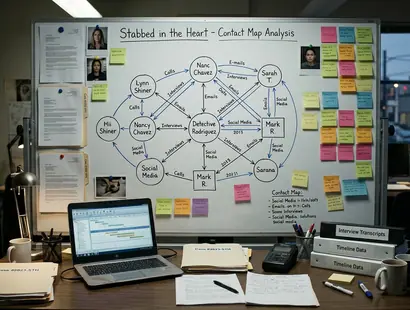
Create a private contact map during days 1 to 7. It should name the primary decision-maker, backup decision-maker, children or elders needing care, faith or community contact, victim-witness contact if already assigned, and anyone the family does not want contacted.
This map is not a public directory. It is a safety and dignity tool.
Note: Co-victims may disagree about who should receive updates or attend meetings. The advocate should record the family’s stated preference for each task rather than assume that legal next of kin, household members, and emotional supports are the same people.
Analyzing What Families Actually Need
Effective support begins by sorting needs into three lanes: emotional presence, practical logistics, and systems navigation. Each lane requires different behavior from the advocate.
Use narrow questions before taking action
A broad offer such as “Tell me what you need” often gives the family another assignment. A narrow question lowers the effort required to answer. Ask one question, record the answer, and confirm who has permission to act.
- Emotional presence: sitting quietly, listening without correction, checking whether the family wants company or silence.
- Practical logistics: meals, transportation, childcare, obituary or service tasks, visitor boundaries, phone screening, and safe storage of cards, documents, and receipts.
- Systems navigation: police updates, prosecutor meetings, court dates, compensation paperwork, workplace leave letters, school communication, and courtroom accompaniment.
Crisis-phase needs usually cluster in days 1 to 14. Procedural-phase needs often emerge from week 2 through 24 months. Long-term grief support extends well beyond the funeral.
Build a month-by-month support rhythm
The first month should not be treated as the whole crisis. Calendar check-ins at 1 month, 3 months, 6 months, the first birthday after the death, the first holiday season, and the first anniversary. These dates are not sentimental markers. They are predictable points when grief, court contact, family conflict, and public memory may intensify.
Summary: Map before acting. A meal, ride, or phone call helps only when it fits the family’s actual need, timing, and permission structure.
Offering Presence Without Pressure
Reliability builds trust over months, not through one dramatic gesture. The better offer is repeatable and specific.
Instead of saying, “Call me if you need anything,” the advocate can say, “I can bring dinner Tuesday between 5:00 p.m. and 6:00 p.m., or I can do school pickup Thursday from 2:30 p.m. to 4:30 p.m. Which is easier?” The family can answer without designing the whole plan.
Choose one commitment and keep it
Practical help — meals, childcare, transportation, reduces decision fatigue when basic choices feel heavy. Offer support in 2- to 4-hour blocks. Examples include meal delivery between 5:00 p.m. and 6:00 p.m., sitting with the family during a 9:00 a.m. courthouse appearance, or handling school pickup from 2:30 p.m. to 4:30 p.m.
For the first 8 weeks, use a simple rhythm: one practical check-in per week, one no-pressure emotional check-in per week, and an immediate pause if the family asks for quiet.
Listen without fixing
Acute grief does not need interpretation. Avoid phrases such as “everything happens for a reason,” comparisons to another loss, or claims about how strong the family is being. Safer phrases include “I am here,” “I can sit with you,” “I do not need you to respond,” and “Would Tuesday or Thursday be better for a meal?”
Quick Tip: Send messages that require no reply. “No need to answer. I am dropping dinner at 5:30 unless that is not okay” gives the family control without creating another task.
Navigating Criminal-Justice and Victim Services
The advocate’s role is not to explain the law as though every jurisdiction works the same way. The role is to help the family locate the right offices, preserve dates, and reduce isolation during procedures.
Identify the victim-services contact early
During the first police or prosecutor interaction, ask for the victim-witness or victim-services contact. Record the person’s name, office phone, email, case number if provided, and preferred method for updates. The Office for Victims of Crime can also help families and advocates understand common categories of victim assistance, though state rules still control many benefits.
Because state forms and court practices change, this guide treats deadlines as verification tasks rather than fixed rules.
Maintain a factual case timeline
A timeline should show what happened, what is scheduled, who said it, and what documents are needed next. Keep entries dated and plain: law-enforcement contact, medical examiner or coroner contact, charging decision if announced, first court appearance, bond or detention hearing, preliminary hearing, trial setting, plea hearing, sentencing, and restitution discussion.
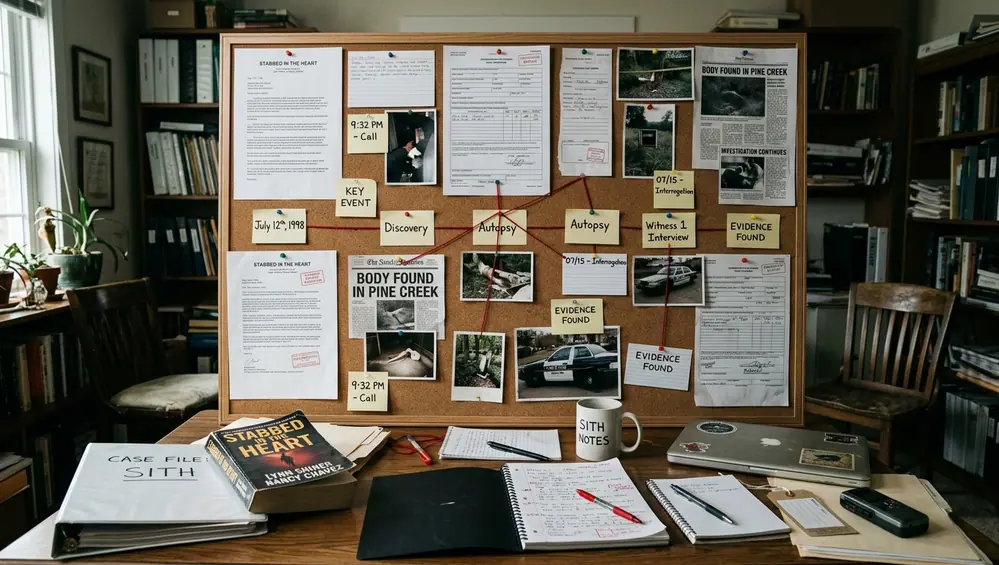
For crime-victim compensation, collect receipts and records from day 1: funeral invoices, counseling bills, transportation receipts, lost-wage documentation, death certificate when available, and any insurance or donation offsets requested by the program. Filing windows are state-specific; many programs require prompt law-enforcement reporting and a separate written application. Verify the deadline in writing within days 7 to 30.
Some families want courtroom accompaniment from the first hearing. Others want only one spokesperson present. Ask, record, and revisit the preference as the case develops.
Common Mistakes That Harm Instead of Help
When unsure, default to permission, privacy, and consistency. Those three practices prevent many injuries that well-meaning supporters cause during the first weeks.
Do not become the family’s public voice
The clearest boundary is media consent. An advocate should not give a reporter a quote, confirm funeral details, share a fundraising link, identify relatives, or comment on suspect information unless a designated family representative has approved the exact wording and timing.
Survivor accounts point to a recurring privacy harm in homicide cases: once information moves into public circulation, the family may lose control over who sees it, repeats it, or attaches speculation to it. The first week of shock is not the time for outsiders to decide what the public deserves to know.
Do not impose a recovery timeline
Do not tell the family they should answer messages within 24 or 48 hours. Do not compare this death to another loss. Do not suggest that a memorial service, arrest, plea, or sentencing will close the grief.
Support also commonly drops after the funeral or memorial, often within weeks 2 to 6. Friends may deliver meals for about ten days and then disappear just as prosecutor meetings and early court dates begin. Schedule concrete help into months 2 through 6 so the family is not abandoned when public attention fades.
- Ask before posting the victim’s name, image, funeral details, fundraising link, suspect information, or courtroom update.
- Ask before sharing case information with extended family, employers, schools, faith communities, or neighbors.
- Ask before attending court, sitting beside the family, or speaking to an official on their behalf.
Scope and Limitations of This Guidance
This guidance draws on lived-experience advocacy informed by homicide-survivor accounts, including the perspective documented in Stabbed in the Heart by Lynn Shiner and Nancy Chavez. It also fits the practical learning space many readers find through The Authors Zone (TAZ), where story and service often meet.
It is not a clinical treatment protocol. Advocacy supplements family-led support, licensed trauma therapy, legal representation, law-enforcement safety planning, and jurisdiction-specific court advice. It does not replace them.
Know when to escalate
Escalate immediately to licensed or official help if a survivor describes suicidal intent, current threats, stalking, domestic-violence danger, retaliation risk, child-safety concerns, or inability to sleep or function for several consecutive days. The advocate should not hold those risks alone.
Before giving procedural advice, verify the local rule with the prosecutor’s office, victim-witness coordinator, court clerk, compensation program, or legal counsel within 1 to 3 business days.
Advocate’s first-month checklist
- Ask who the family wants treated as the point of contact and who should not receive updates.
- Make a private contact map during days 1 to 7.
- Separate needs into emotional presence, practical logistics, and systems navigation.
- Offer specific 2- to 4-hour blocks of help rather than broad availability.
- Record victim-services contacts, case numbers, dates, and next follow-up steps.
- Collect compensation-related receipts and documents from day 1.
- Schedule support beyond the memorial, including months 2 through 6.
Bibliography
- Lynn Shiner and Nancy Chavez, Stabbed in the Heart.






Your Thoughts
Nothing here yet. Add your opinion.