
A Life Interrupted: Understanding the Loss
Randi Chavez was a daughter first. Before any case number, before the medical examiner, before the words that would later fill a courtroom, she was someone's child — laughed at, fussed over, remembered for the small things only a family keeps. That is where any honest account of her has to begin.
I write this knowing the temptation, in a story like hers, to lead with how she died. Resist it. To describe Randi only through the violence done to her would reproduce the very harm survivors fight against: the reduction of a whole person to the worst moment of her absence.
Homicide loss does not arrive the way other deaths do. An expected death, even a sudden medical one, usually leaves families a stable account of what happened. A killing rarely does. Alongside ordinary mourning, families inherit a second set of obligations: police contact, coroner procedures, prosecutor communication, and sometimes the glare of media exposure.
The first shock is procedural as much as emotional. In the interval between notification and funeral — commonly a window of anywhere from a day to two weeks, parents are asked to identify or receive a body, plan services, reach relatives, and respond to investigators, all at once. Decisions that should never be rushed are demanded immediately.
And then comes the waiting. Investigative findings, charging decisions, hearings, case updates. A family can be left without a settled public story of what happened to their child for months, sometimes years. That disorientation — grieving without ground to stand on, is its own particular wound.
The Anatomy of Traumatic Grief
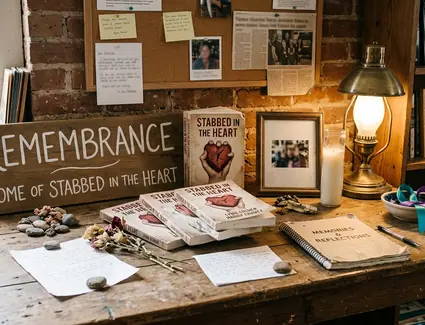
It helps to separate three burdens that homicide bereavement stacks together. There is the attachment loss — the simple, devastating fact that the person is gone. There is the trauma of the violence itself. And there is the justice process, which keeps the wound open on a schedule no family controls.
Treating this as ordinary mourning misses how the three reinforce each other.
What researchers track
Clinicians describe prolonged grief disorder in adults as requiring that the death occurred at least twelve months earlier, with persistent longing or preoccupation and real impairment in daily life; for children and adolescents, the timing threshold is six months. PTSD frameworks work differently — they look for intrusion, avoidance, shifts in mood or cognition, and changes in arousal persisting more than a month after exposure to threatened or actual death.
The two can travel together in a survivor without canceling each other out. Much of the careful research on prolonged grief and traumatic bereavement distinguishes them precisely because the support each calls for is not identical.
When the system reopens the wound
Here is what families learn the hard way. A homicide case is not one event but a corridor of them: initial investigation, charging decision, preliminary hearings, trial preparation, testimony, sentencing, post-conviction motions, parole hearings, appeals. Each milestone can arrive months or years apart. Each one can pull a parent back into the worst day.
This is why the criminal-justice process, however necessary, so often re-traumatizes the people it is meant to serve.
Trauma-informed grief research recognizes memorialization, narrative reconstruction, and continuing bonds with the deceased as practices that help survivors integrate a death — without pretending the death was acceptable or fully resolved.
That last clause matters. Integration is not closure. Nobody is asking a parent to be at peace with a murder.
Memory as an Anchor: What Remembrance Provides
Remembrance is not a sentimental afterthought. It is work. Parents preserve names, photographs, writings, service projects, and testimony because those acts keep a child's identity present in a world that moves on too quickly.
For a grieving parent, this is partly about identity continuity. The relationship does not simply end; it changes form. Keeping Randi's story in active circulation lets her mother remain her mother, rather than only a survivor of a crime.
Concrete practices
The forms remembrance takes in a story like this are practical and varied:
- Annual family rituals and public memorial gatherings
- Scholarships or donations made in the child's name
- Victim-impact statements entered into the record
- Written testimony, including the book-length account that Stabbed in the Heart represents
Many families anchor these to dates they already carry — a birthday, a death anniversary, a sentencing date, the holiday season, the day of a public advocacy event. The calendar becomes a way to choose how grief shows up rather than only being ambushed by it.
Quick Tip: If a survivor in your life is approaching one of these dates, you do not need the perfect words. Naming the date out loud — "I know this week is heavy", often does more than a paragraph of comfort.
Shared remembrance also breaks isolation. It gives other homicide survivors a recognizable language for experiences they tend to hide: intrusive images, anger at the offender, the fear of forgetting a child's voice, the plain exhaustion of legal proceedings. Hearing your private dread spoken by someone else is its own relief.
Healthy remembrance keeps contact with the full reality of the loss. The person is honored, the death is not denied, and the survivor stays able to make some room for present relationships and responsibilities. That balance is the marker — not forgetting, not drowning.
Turning Memory Into Action: Randi's Legacy
Legacy, in Randi's case, reads as a sequence of decisions rather than a single transformation. Nancy Chavez carried her daughter's memory into public testimony and survivor support. Private grief was slowly shaped into language other people could use.
The collaboration with Lynn Shiner turned that language into something durable. A book project does work that scattered records cannot: it converts family memory, case chronology, court-process recollections, and survivor reflection into coherent chapters instead of isolated incidents. Stabbed in the Heart is that organizing act — a survivor's account written so that others can follow it.
What the work actually produces
It is worth naming outcomes in operational terms rather than inflated ones. Beneficiary reporting from survivor settings points to a handful of concrete results:
- More accessible language for describing homicide grief from the inside
- A public record of Randi's life — not only her death
- A tool peer-support conversations can lean on
- An entry point for victim-services professionals seeking a survivor-centered view
None of this completes grief. Each retelling, each support conversation, each memorial act, each advocacy appearance extends the work, it does not close it. Legacy here is ongoing implementation, not a finish line.
Summary: Nancy Chavez channeled an unspeakable loss into public service and written testimony. The value lies less in any single milestone than in a sustained practice that keeps helping bereaved parents who come after.
Scope and Limitations of This Account
One family's path is not a prescription. This is narrative remembrance and survivor advocacy — not psychotherapy, not legal advice, not crisis intervention, and no substitute for medical care.
It would be a quiet betrayal to imply that advocacy is the expected or superior form of healing. Many survivors grieve privately, avoid public speaking, or cannot safely engage with their case at all — and they grieve with full dignity. Grief timing varies enormously: some reach for peer contact within weeks of the killing; others cannot engage publicly for months or years; some never choose advocacy of any kind.
Note: Remembrance and public storytelling can be healing for some homicide survivors, but they may intensify distress for others — especially during active court proceedings or acute trauma symptoms. Families in open investigations, pending trials, appeals, or parole-review periods often need different language than families whose case closed years ago.
If you are carrying this kind of loss, appropriate support includes licensed trauma-informed clinicians, local victim-witness assistance programs, prosecutor-based victim advocates, and homicide-survivor groups. If you are in immediate danger, contact emergency services first.
Randi Chavez was a daughter. Everything written here is in service of that fact, and of the people still learning to live alongside her absence.




Your Thoughts
Nothing here yet. Add your opinion.