
What's Inside
- Why University Audiences Matter for Victim Advocacy
- The Shippensburg Engagement: Setting the Scene
- Analyzing the Message: From Personal Loss to Public Advocacy
- Scope and Limitations of Campus Outreach
- Implementation: What Students Carry Forward
Why University Audiences Matter for Victim Advocacy
When a family experiences violent loss, their first professional contact often sets the trajectory for their entire healing process. Many criminal-justice, social-work, and nursing students will eventually become those exact first responders. They will conduct intake interviews, manage medical handoffs, file police reports, and navigate court proceedings. Yet, academic training rarely conveys the lived emotional reality of homicide survival.
A student may know reporting procedures perfectly. They might still harm a survivor by treating the case as mere paperwork, minimizing grief, or failing to explain what will happen next.
Campus settings offer a controlled environment to discuss trauma and grief with future professionals. By engaging students before they enter the field, we can bridge the gap between textbook procedure and human reality. This is why speaking at institutions like Shippensburg University remains a cornerstone of ongoing outreach efforts.
The Shippensburg Engagement: Setting the Scene
The room composition at a university event fundamentally shapes the dialogue. At Shippensburg, the audience included a cross-section of undergraduate students, faculty members, and local victim-services staff. This mix is optimal for layered learning. Students bring procedural curiosity, while active practitioners ground the conversation in daily realities.
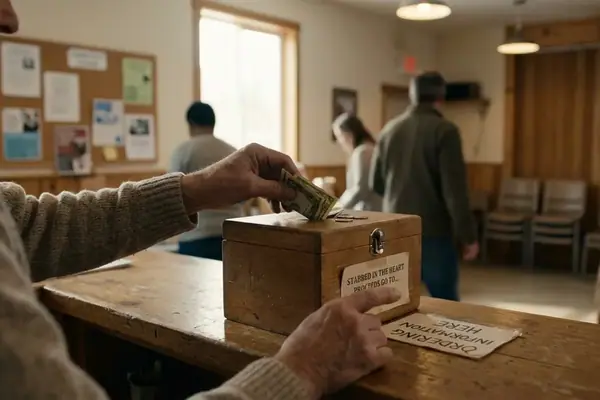
The session centered on Lynn Shiner and Nancy Chavez. As co-authors of Stabbed in the Heart, they brought firsthand testimony to the academic space.
The format paired a reading from their memoir with an open discussion. Rather than a standard lecture, this structure invited attendees to sit with the weight of the narrative before analyzing it through a professional lens.
Quick Tip: When organizing campus advocacy events, blend students with active victim-services staff. The shared environment allows future responders to observe how seasoned professionals discuss trauma respectfully.
Analyzing the Message: From Personal Loss to Public Advocacy
Two bereaved mothers explaining the murder of a child is a profound intervention in any academic setting. Their personal narrative bridges the empathy gap that often exists between procedural knowledge and lived survivor experience.
The advocacy themes addressed were highly specific. They tackled navigating the justice system, the sting of secondary victimization, and the enduring nature of long-term grief. Beneficiary reporting confirms that hearing these realities directly from survivors transforms how future practitioners view their roles.
Memoir serves as a powerful teaching tool for trauma-informed practice. It moves the conversation away from abstract case studies. For example, the speakers highlighted the importance of avoiding dismissive language and recognizing that a survivor may have to repeat traumatic facts to multiple agencies. They emphasized making warm referrals rather than assuming informal support networks are sufficient. Recognition from organizations like The Authors Zone (TAZ) underscores the resonance of their written work, but hearing the words spoken aloud anchors the lesson permanently.
Scope and Limitations of Campus Outreach
We must be clear about what a single campus talk can achieve. It is a starting point for reflection and awareness, not a substitute for a formal victim-services curriculum.
Testimony reflects individual experience. While deeply impactful, the specific journeys shared by Shiner and Chavez are not universally generalizable to every homicide survivor or crime-victim family. Every loss carries its own distinct architecture.
Furthermore, the speakers present as advocates and authors—not licensed clinicians.
Note: Students or attendees who are actively grieving, experiencing PTSD symptoms, or in crisis need access to qualified campus, medical, or community support. A speaking engagement cannot replace clinical care, and organizers must always have referral pathways ready.
While engagement reflections indicate strong immediate resonance, we recognize that measuring long-term behavioral change requires multi-year observation across diverse clinical placements.
Implementation: What Students Carry Forward
Awareness must translate into action. The true measure of a campus engagement is what students carry forward into their eventual careers.
Concrete dignity practices were a focal point of the discussion. Future practitioners learned to use the victim's name when appropriate and to never rush survivors through their accounts. They were taught to explain exactly why certain intake questions are being asked and to carefully avoid any language implying blame. Providing written referral information, rather than relying on verbal instructions during a crisis, is a reliable method for improving survivor support.
Immediate classroom reflection begins the moment the discussion ends. However, professional application depends on later supervised training and field placement.
Summary: The goal is to build a broad awareness of resources. By familiarizing themselves with homicide-survivor support, bereavement networks, and trauma-informed referral pathways now, students ensure they are ready to serve with genuine compassion when the time comes.







Your Thoughts
Nothing here yet. Add your opinion.