
The Memoir Behind the Mission
In my ongoing work with community response teams since 2016, I have seen how isolation compounds trauma. When the gavel falls and the courtroom empties, the criminal justice system moves on—but the families left behind do not. They enter a long, quiet period after court proceedings where specialized support is scarce.
This is the landscape that Stabbed in the Heart addresses.
Co-authored by Lynn Shiner and Nancy Chavez, the memoir documents the murder of their children and their subsequent path through grief. It is a lived-experience resource built specifically for homicide survivors, bereaved parents, trauma survivors, advocates, and victim-services professionals.
The book serves three distinct functions: a personal narrative, a peer-to-peer grief resource, and a proceeds-supported advocacy tool. By bridging these roles, it connects reader purchases directly to broader community outcomes.
Why the Proceeds Model Matters
Crime-victim services face a significant funding gap. Once a trial concludes, the structured support surrounding a family often dissipates. Yet, the need for grief support, advocacy help, and community connection remains acute.

The proceeds model bridges this gap. Author proceeds from the memoir are directed toward homicide-survivor support and crime-victim advocacy rather than personal profit. This structure aligns the book's financial footprint with a nonprofit mission of healing after violent loss.
Beneficiary reporting confirms that sustained funding allows advocacy groups to plan long-term interventions, though outcomes vary based on local implementation. However, the exact amount available for advocacy fluctuates. It is affected by the edition type, printing costs, retailer terms, shipping treatment, and whether the copy is sold directly or through an outside seller. Proceeds are also rarely available at the exact moment of purchase. Reconciliation typically occurs after seller or printer statements are issued, commonly on monthly or quarterly accounting cycles depending on the specific arrangement.
Comparing Where and How to Order
Choosing where to buy the book depends entirely on your primary goal. If your priority is maximum mission support, the official ordering path is optimal. Direct orders generally preserve the clearest connection between the buyer and the advocacy mission. Conversely, outside sellers and general book retailers often deduct platform fees, printing charges, fulfillment costs, or retailer margins before any author proceeds are calculated.
Print-on-demand and paperback distribution routes offer convenience but alter the financial return. If you are ordering through specialized platforms like The Authors Zone (TAZ), understanding these trade-offs ensures your purchase aligns with your intentions.
Selecting the Right Format
- Paperback: Usually the most practical format for support-group circulation and lending libraries.
- Hardcover: Best suited for durable gifting, permanent library collections, or memorial copies.
- Ebook: Ideal for readers who require immediate access or adjustable text sizing.
Professionals planning bulk orders must provide specific details: quantity, delivery deadline, recipient organization, shipping address, and whether signed copies are requested. You should initiate bulk or signed-copy inquiries roughly two to four weeks before a group meeting, memorial event, training, or library deadline.
Step-by-Step: Placing Your Order
Navigating the checkout process requires a few standard details. You will need to provide the purchaser name, email address, shipping name, shipping address, billing details, quantity, and edition format. If the order path allows it, you can also include a gift message or a signing request.
For signed or bulk copies, readers should inquire before checkout if the site does not explicitly show a signed-copy option. Signed inventory and shipping schedules frequently differ from standard stock, requiring manual processing by the author's team.
Save your order confirmation immediately upon checkout. If no confirmation arrives within a day or two, contact the seller using the email address or form provided on the order page. Request any address corrections as soon as an error is found and before fulfillment begins. Once a package is accepted by the carrier, address changes may be limited or entirely unavailable.
Quick Tip: When gifting a copy to a bereaved parent or trauma survivor, always check the recipient's readiness first. Avoid surprise deliveries if your relationship is not close, and include a gentle message rather than applying explanatory pressure to read it immediately.
Scope, Honesty, and Limitations
Protecting reader trust requires clear boundaries regarding what this resource can and cannot do. The memoir offers witness, language, and lived-experience solidarity. It is a steady companion for the lonely hours of grief.
It is not, however, clinical treatment or legal advice. It does not provide a universal description of every homicide survivor's unique experience. Survivors needing treatment for trauma symptoms, acute grief, PTSD, or safety concerns should pair their reading with qualified clinical, crisis, or victim-assistance support.
Similarly, direct any legal questions about prosecution, restitution, appeals, compensation, or victims' rights to qualified legal or victim-services personnel. Do not attempt to resolve complex legal realities through the memoir.
Note: Proceeds allocation depends heavily on the selling channel and the terms in place at the time of purchase. Funding priorities and program needs can also shift between printings, annual planning cycles, or new advocacy initiatives.
What Your Order Sets in Motion
An individual order rarely stops with a single reader. One person purchases a copy, the proceeds support mission work, and the physical or digital book begins its circulation through the community.
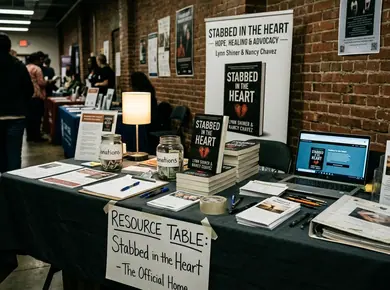
Consider a support-group facilitator. They might keep a paperback copy on a resource table, lending it to a newly bereaved parent. They might recommend a specific chapter when a participant is struggling to name their anger, shock, isolation, or the long aftermath of murder. In a victim-services office, a single library copy can serve multiple readers over time, especially when professionals include it in a curated resource list for families.
This downstream circulation is where the true value of the memoir is realized. It transforms a solitary reading experience into a shared community asset. A single print copy may be read immediately by the purchaser, gifted within days, placed in a group resource area during the next meeting cycle, or circulated over repeated support sessions.
Summary: Choose the ordering path that best matches your immediate goal—whether that is direct mission support, quickest access, gift suitability, or bulk distribution. Every purchase becomes part of someone else's healing.











Your Thoughts
Nothing here yet. Add your opinion.