
When Belongings Become Part of the Evidence
An evidence hold is the period during which law enforcement or the prosecution keeps physical items connected to a crime for investigation or court proceedings. Staff identify, package, seal, and store the items, documenting their handling through chain-of-custody records.
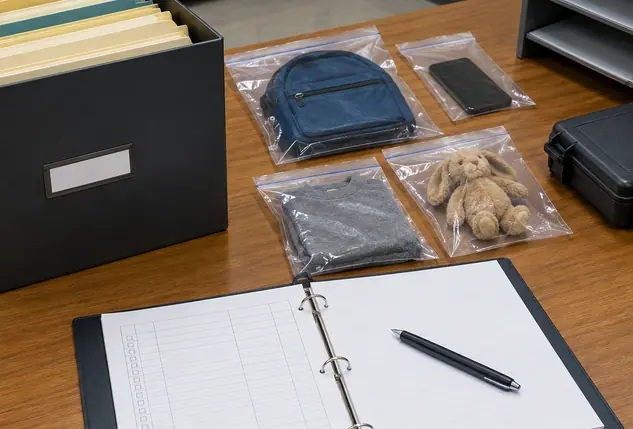
For a parent whose child was murdered, those records may describe a jacket, a phone, a wallet, a backpack, or a piece of jewelry. Investigators may also collect belongings from the child's bedroom, home, or vehicle. Each description refers to something the child wore, carried, or touched. Waiting for its return can carry a grief of its own.
Imagine a parent asking for a child's jacket and phone. The two objects may have different property numbers, different reasons for retention, and different paths toward release. Asking about each separately gives the family a clearer starting point than asking when “everything” can come home.
Evidence and personal effects can follow separate routes. A medical examiner or coroner may hold personal effects under a separate inventory and release process. Police may hold other belongings as evidence. Establishing who holds each object comes first.
Why the Wait Can Outlast a Trial
A case moves through stages: investigation, charging decisions, trial, and sometimes appeals or post-conviction proceedings. Belongings can remain in storage throughout those stages. In an unsolved homicide, retention can continue indefinitely because a future arrest or new forensic testing may require the original objects.
Completion of testing alone does not authorize return. Investigators assess whether they still need the item; prosecutors assess its continuing value to the case. Release may also require a court order. The property unit acts once the necessary authorization reaches it.
That distinction matters during a phone call. “The laboratory has finished with the jacket” answers a different question from “The jacket has been approved for release.” Ask what decision remains and who is responsible for making it.
A useful request names the particular object and asks what examination or case milestone is preventing a release decision. This gives the next conversation a specific subject, even when the waiting continues.
Finding the Person Who Can Move the Request Forward
The office storing an item and the person deciding its release may be in different places. Ask for a named contact who can carry the request between offices, so the family can continue the conversation without reconstructing it at every call.
Release procedures differ by jurisdiction and agency, so ask the agency handling the case to explain its process in writing.
The Detective and Prosecutor
The lead detective or case agent identifies collected items and assesses their investigative use. Ask which property numbers remain necessary for investigation and who must review a release request.
The prosecutor's office assesses prosecution-related retention and seeks or provides the required authorization. Ask what approval is needed and whether photographs or retained samples could preserve what the case needs while allowing an object, or part of it, to return.
The Property Unit and Medical Examiner
The evidence or property unit maintains storage records and handles authorized collection. It can confirm whether authorization has arrived, what identification the collector needs, and how appointments and receipts work.
The medical examiner or coroner can account for personal effects received with the child's body. Ask whether that office has a separate inventory or transferred the effects elsewhere.
Advocates Who Help Coordinate
A victim-witness advocate can relay requests, explain case milestones, and help coordinate collection. The advocate's coordinating role does not include release authority.
A community-based homicide-survivor advocate offers support independent of the investigating or prosecuting office. That person can accompany a parent and help track unanswered requests. Victim advocacy can make the administrative work more manageable while the parent keeps control of personal decisions.
Questions That Give Each Belonging a Clear Status
Organize the conversation around four questions: who holds the item, why it remains evidence, who can authorize release, and how the family wants to receive it. Keep the written inventory beside the questions so answers connect to specific property numbers.
- Inventory: Which of my child's belongings are held, and can I receive a written list with property or evidence numbers and the agency holding each item?
- Current status: Which items remain evidence, and which personal effects could come home now?
- Release decision: Who must approve each release, and what examination or case milestone is preventing a decision?
- Possible alternatives: Could photographs or a retained sample preserve the evidence needed while allowing the remainder to return?
- Condition: Will the items remain sealed or come back as stored? Can someone describe their condition before collection?
- Notification: Will you record my request for written notice before release, transfer, or destruction?
- Continuity: Who will handle future inquiries, and who takes over if that person's assignment changes?
Finish by agreeing on the next contact date. A named person, an item number, and a defined next step make a reply easier to follow up.
Keeping One Record Through Every Handoff
A dedicated notebook or file gives the request a home. Begin with the case number, then keep the property list and contact details together. Record each person's name, title, agency, telephone number, and email address.
After every call, email, or meeting, note the date, what was asked, what the contact said, who will take the next action, and the agreed follow-up date. A short email after a phone conversation creates a dated record:
Thank you for speaking with me about my child's belongings. My understanding is that the release request for the jacket is under review. Please confirm who is reviewing it and when I should contact you again.
Keep the stages distinct: request received, under review, release authorized, and ready for collection. Each describes a different point in the process.
Store notification requests separately from release requests within the same file. Keep replies and signed collection receipts, too. A trusted person or advocate can maintain the record and draft summaries while the parent remains involved in decisions about the belongings.
Planning How the Belongings Come Home
Bringing an object home and opening its packaging are separate decisions. A parent might authorize an advocate to collect opaque packages, leave them unopened at home, and choose a later private time to look through them with support present.
Before setting an appointment, confirm which property numbers have release approval, the identification required, and any paperwork needed for someone else to collect them. Ask whether sealed or opaque outer packaging is available.
Request an item-by-item description of condition before collection. Clothing may have sections removed for forensic sampling. Other belongings may carry fingerprint-processing residue, evidence markings, stains, damage, or persistent odors. Ask directly about biological or chemical hazards and handling instructions. Follow appropriate professional guidance before handling or washing an item identified as hazardous.
Release authorization and readiness to receive an item are separate decisions. A parent can choose to collect belongings personally, ask someone trusted to receive them, or request a description before deciding how to proceed.
Cleaning can wait. Some parents preserve clothing untouched, including its scent; others choose washing or professional restoration. Both choices belong to remembering our children. For clean, fully dry textiles, breathable archival storage away from light and dampness is preferable to prolonged storage in ordinary sealed plastic.
For a returned phone, ask about its physical condition and access status before charging or connecting it. Preserve accessible photographs and messages in a separate backup. For belongings that cannot come home, request existing photographs or permission for new ones, and keep descriptions in a memory book.
Start With a Written Property-List Request
This week, send a message to the victim-witness advocate or lead detective. Identify your child, your relationship, the case number if known, and a reliable way to reach you. The request can be brief:
Please send me a written inventory of my child's belongings held in connection with this case, including property or evidence numbers and the agency holding each item. Please record my request for written notification before any item is released, transferred, or destroyed, and confirm who will handle future inquiries.
Send that request, save the sent message as the first page of your property-request record, and mark a follow-up date on your calendar.



Your Thoughts
Nothing here yet. Add your opinion.