
The Trial Starts Before Opening Statements
A homicide trial begins for a bereaved family weeks before anyone addresses the jury. During the 14 to 21 days before opening statements, decisions about parking, seating, telephone calls, difficult evidence, reporters, and the ride home shape the family’s daily contact with the courthouse.
The verdict remains outside the family’s control. That boundary gives added importance to everything the family can arrange. A written court-support plan should cover the arrival route, parking payment, gallery seating, contact chain, testimony exits, reporter response, and post-verdict transportation. The family can then reconfirm it with the victim/witness advocate two to three court days before jury selection or opening statements.
This approach reflects the survivor-centered concerns behind Stabbed in the Heart. Readers arriving through The Authors Zone (TAZ) may recognize the underlying principle: dignity often rests on ordinary details handled before exhaustion takes over.
Control the Contact
The family can design the 8:15 arrival, hard-testimony exit, 7:00 p.m. update, and post-verdict ride. The jury’s decision belongs to the jury.
The Court Calendar Extends Beyond Trial Week
Map Every Stage
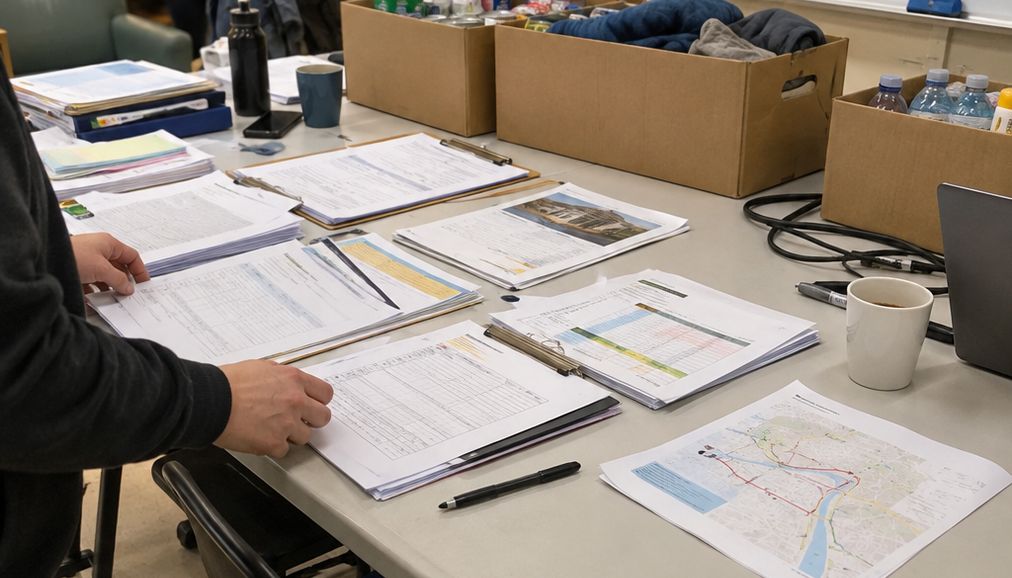
An announced trial date reveals only one part of the schedule. The family’s steady contact should ask the prosecuting office to map the case from the next scheduled appearance through sentencing.
- Preliminary and motion hearings may require attendance before trial.
- Continuances can move dates with little notice.
- Jury selection may involve long periods of waiting.
- Evidence days can change order as witnesses become available.
- Deliberations create an uncertain reporting window.
- Sentencing may occur several weeks or months after the verdict.
Each notebook entry should identify whether a date is confirmed, tied to a pending motion, or likely to move. The contact confirms the reporting time one court day before each appearance and asks at every recess when the next session is expected to begin.
Prepare for the Physical and Evidentiary Load
Early arrival, security screening, hard gallery benches, shifting lunch recesses, and shared hallways consume energy. Families may also encounter autopsy photographs, scene images, 911 recordings, clothing, or medical testimony. Before trial, the contact can ask which witness is expected to introduce that material while recognizing that witness order may change.
A person who plans to leave during certain evidence should choose the exit signal, escort, and waiting place beforehand. That decision prevents a painful hallway negotiation after the testimony has begun.
Twelve Caring Callers Can Fracture One Schedule
Support often breaks down through love without coordination. Several relatives call the prosecutor’s office separately, write down different answers, and circulate conflicting versions of the schedule. An unconfirmed continuance then travels faster than the official correction.
The practical remedy is one communication line. One named contact receives information from the prosecutor or advocate, and one backup has the same notebook and message list. When a date changes, the contact sends a timestamped group update within 60 minutes of confirmation. Relatives avoid relying on news alerts, social-media posts, or courthouse comments.
Decide Who Faces the Cameras
Media contact requires the same advance assignment. Without it, a grieving parent may encounter a camera and a request for comment while trying to leave the building. The family should authorize one spokesperson and place a prepared hallway response on index cards carried by the group.
Hallway Boundary
“We’re not commenting until after sentencing.”
The written plan should continue through the first week after the verdict. At least one support contact belongs on the calendar during the following three to seven days, when court activity may stop while the family’s emotional and practical needs continue.
Build the Courthouse Route Before the First Morning
Work Backward from Reporting Time
Set arrival 30 to 45 minutes before the court’s reporting time. Select one driver for each group rather than forming a convoy. Verify the garage or lot opening time, payment method, and walking route, then designate a pickup point away from the courthouse steps where cameras may gather. Name a replacement driver in case the original driver cannot continue.
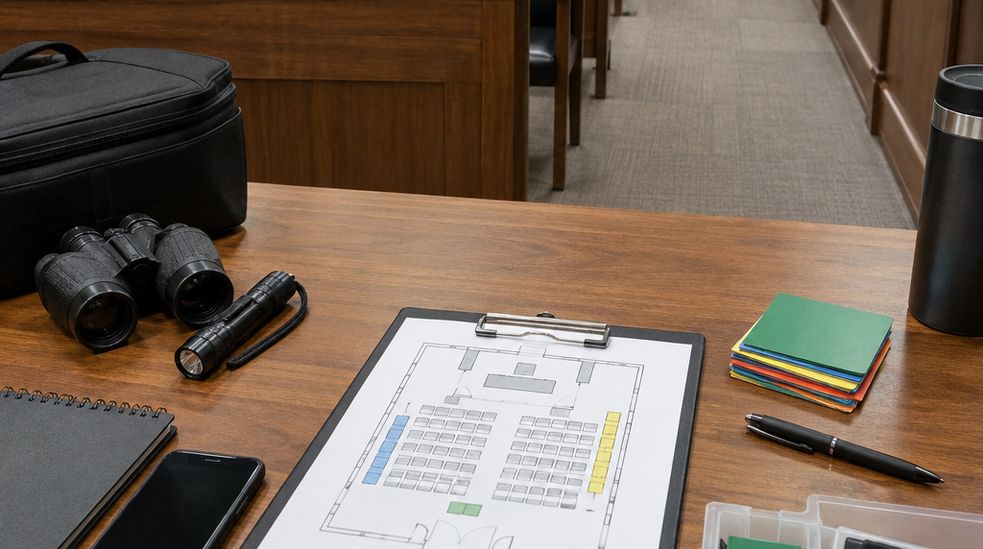
Seven to 14 days before trial, ask whether the victim/witness advocate can arrange an empty-courtroom walkthrough. The family can use that visit to locate the bench, jury box, counsel tables, gallery doors, and any reserved rows. It can also ask about a separate waiting area, alternate entrance, or separation between victim and defendant supporters.
Courthouse procedures and victims’ rights differ by state, county, judge, and case. This practice-based plan supports logistical preparation rather than legal decision-making. The assigned advocate remains the appropriate source for local access rules; the federal Office for Victims of Crime also provides general victim-service information.
Choose Seats for Movement
A useful row keeps the family together, places the designated escort on the aisle nearest the exit, and allows a quiet departure during difficult testimony. During the walkthrough, the family rehearses one silent signal and identifies where the escort will wait outside.
Before packing, check restrictions on water, food, bags, medication, chargers, and phones. Approved items may include water, shelf-stable snacks, a clothing layer, necessary medication, and a charger.
Give One Person the Notebook and the Phone
The steady contact is often a cousin, close friend, or relative one step removed from the bereaved parents. The person needs enough distance from the center of the loss to take accurate notes under pressure, ask a question twice, and send a clear correction when plans change.
Use a Chronological Record
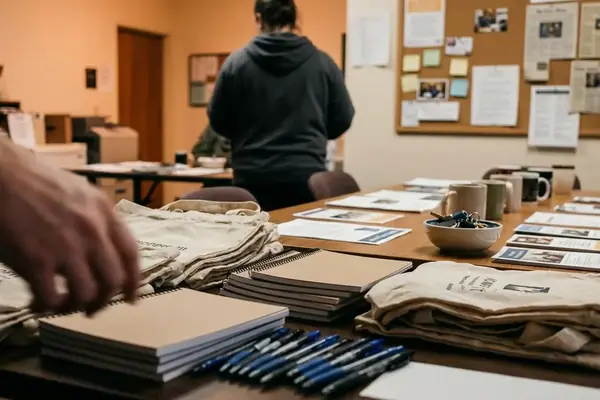
A bound or spiral notebook should contain a separate entry for each communication:
- date and time;
- caller’s name and callback number;
- information received;
- unanswered question;
- next action and person responsible.
The contact and victim/witness advocate exchange direct numbers and agree on how urgent changes will arrive. Same-day reporting changes and continuances go to the family within 60 minutes. Routine information waits for one extended-family summary at a fixed time, such as 7:00 p.m.
A backup should receive the advocate’s number, current schedule, parking plan, and message list three to seven days before trial. A separate companion can sit beside the parents during medical testimony. Dividing the information and companionship roles prevents one person from having to take notes while helping someone leave the room.
Draft the Victim-Impact Statement Before Sentencing Week
Write in Short Stages
The first draft can begin two to six weeks before the expected verdict or sentencing date. Early drafting leaves room for pauses and revisions instead of forcing the writer to confront a blank page during an exhausted week.
The advocate should confirm filing and delivery deadlines, permitted readers, and any time or page expectations. The family can also ask whether photographs may be displayed and whether remarks are directed to the judge, the defendant, or both.
Choose a primary reader and a backup. The writer may read, another relative may take the pages, or the prosecutor may read aloud where local procedure allows. The choice can change on the day.
Rehearse the Body as Well as the Words
- Print the statement in large type and number every page.
- Read it aloud while standing at least twice.
- Mark the sentences where breathing becomes difficult.
- Add visible pause and stopping points.
- Give the backup reader an identical copy.
The grounding plan should also cover difficult trial evidence. Each person decides where to look, which signal means “leave,” and who will accompany them. A counselor, clinician, faith leader, or homicide-survivor support-group contact can be booked for two to seven days after the anticipated verdict.
A Five-Day Court Plan a Family Can Copy
This composite example combines non-identifying details from field experience. It shows how one family converts a difficult week into a sequence of assigned actions.
Fourteen Days Before Trial
An aunt becomes the steady contact. She records the advocate’s direct and office numbers in one spiral notebook, confirms the listed trial date, and requests a courtroom walkthrough. An uncle receives a copy of the contact list and becomes her backup.
Seven Days Before Trial
The family visits the empty courtroom on a quiet afternoon. It chooses the second row, aisle side, nearest the doors. The uncle will sit on the aisle as escort. The family prepays a garage two blocks away for five weekdays, sets arrival for 8:15 a.m., and places the reporter response in every coat pocket.
One Day Before Trial
The aunt distributes the printed schedule and phone list. She checks courthouse restrictions before packing water and food for recesses, then asks when the medical examiner is expected to testify. Each driver receives the garage address and the off-steps pickup point.
During the Five Court Days
The group enters together through the approved side entrance. The grandmother sits between the parents, with the uncle on the aisle. The aunt sends a factual update at each recess and one full family message at 7:00 p.m.
On the anticipated photograph day, the parents give the agreed signal and leave before the images appear. The uncle accompanies them to the selected waiting place. The family keeps that decision settled rather than reopening it in the hallway.
Verdict Day and the Week After
Before entering court, the family confirms the driver, destination, and first telephone call for either outcome. News coverage and comment sections remain closed until the following morning. Within three to seven days, the family attends its prebooked support appointment, retains the notebook, and asks how sentencing, appeal, custody-status, or parole notices will arrive.
The plan ends with a specific handoff: at 7:00 p.m., the aunt sends the final trial-week update, the uncle stores a copy of the notebook, and the designated driver takes the parents directly to the destination chosen before court began.








Your Thoughts
Nothing here yet. Add your opinion.